

Robotics programme · Jaipur

Kids build real robots, step by step

A seven-level, hands-on pathway where children learn how robots sense, think and act by building one themselves. Level 1 is a foundation for classes 3–8, and every level adds more advanced coding, mechanics and control.

How every robot works
  1. SenseThe eyes

    Sensors let a robot notice light, distance and the world around it.

  2. ThinkThe brain

    A controller runs the code that decides what to do next.

  3. ActThe muscles

    Motors and grippers turn those decisions into real movement.

  • + Power The energy

    Safe, low-voltage power keeps every circuit running.

  • + Body The frame

    The structure that holds everything together and does the work.

7
levels, from first robot to full design
₹7,200
per level, everything included
Free
Tinkering Lab access in Jaipur
The pathway

Seven levels, each one deeper

The core ideas stay the same. With every level the mechanics get tougher, the physics more advanced and the coding smarter. Scroll, or pick a level, to see what learners do.

  1. The complete loop

    Across 12 hands-on sessions, learners master the full robotics system and build a fully functioning, autonomous machine.

    A foundation level for classes 3–8. No earlier robotics experience needed.

    What you learn

    • How sense, think, act, power and body work together
    • Block coding for closed-loop navigation
    • Using real distance sensors
    • The science behind it: motion, forces, circuits and motors

    What you build

    • A motorized mechanical gripper, built from scratch
    • A fully functioning, autonomous machine
    Robot skills in focus
    • Sense (in focus)
    • Think (in focus)
    • Act (in focus)
    • Power (in focus)
    • Body (in focus)
Level 1 · Bot Initiate

Twelve sessions, one working robot

Each session takes one idea from everyday science, tests it on the bench and adds it to the robot. By the last session the machine senses, thinks and acts on its own.

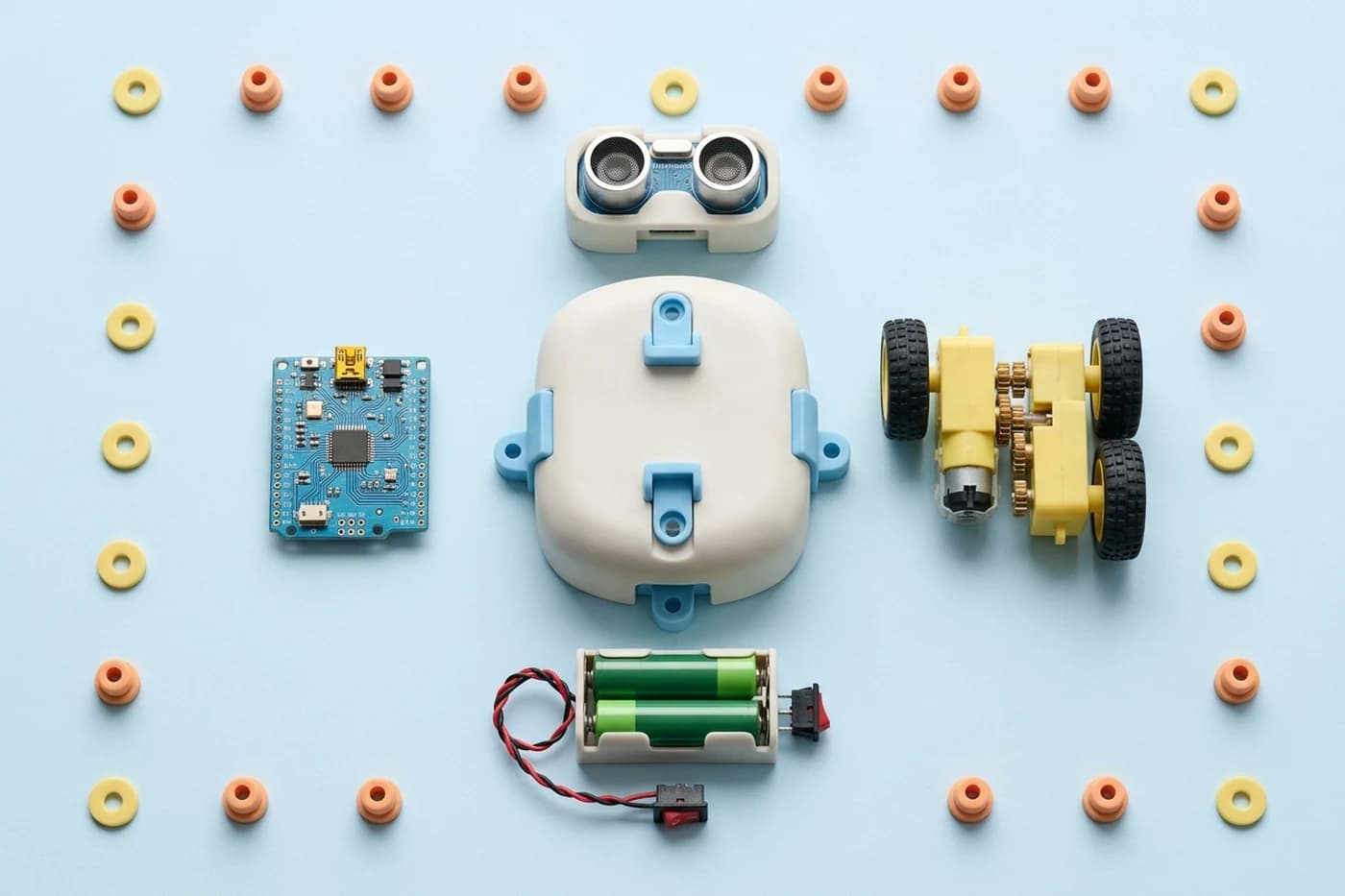
  1. Flat-lay of a small robot's five parts: ultrasonic sensor, controller board, motors with wheels, battery holder and shell
    Session 01

    Meet a Robot System

    Explore Sense, Think and Act, plus the Power and Body that bring a robot together.
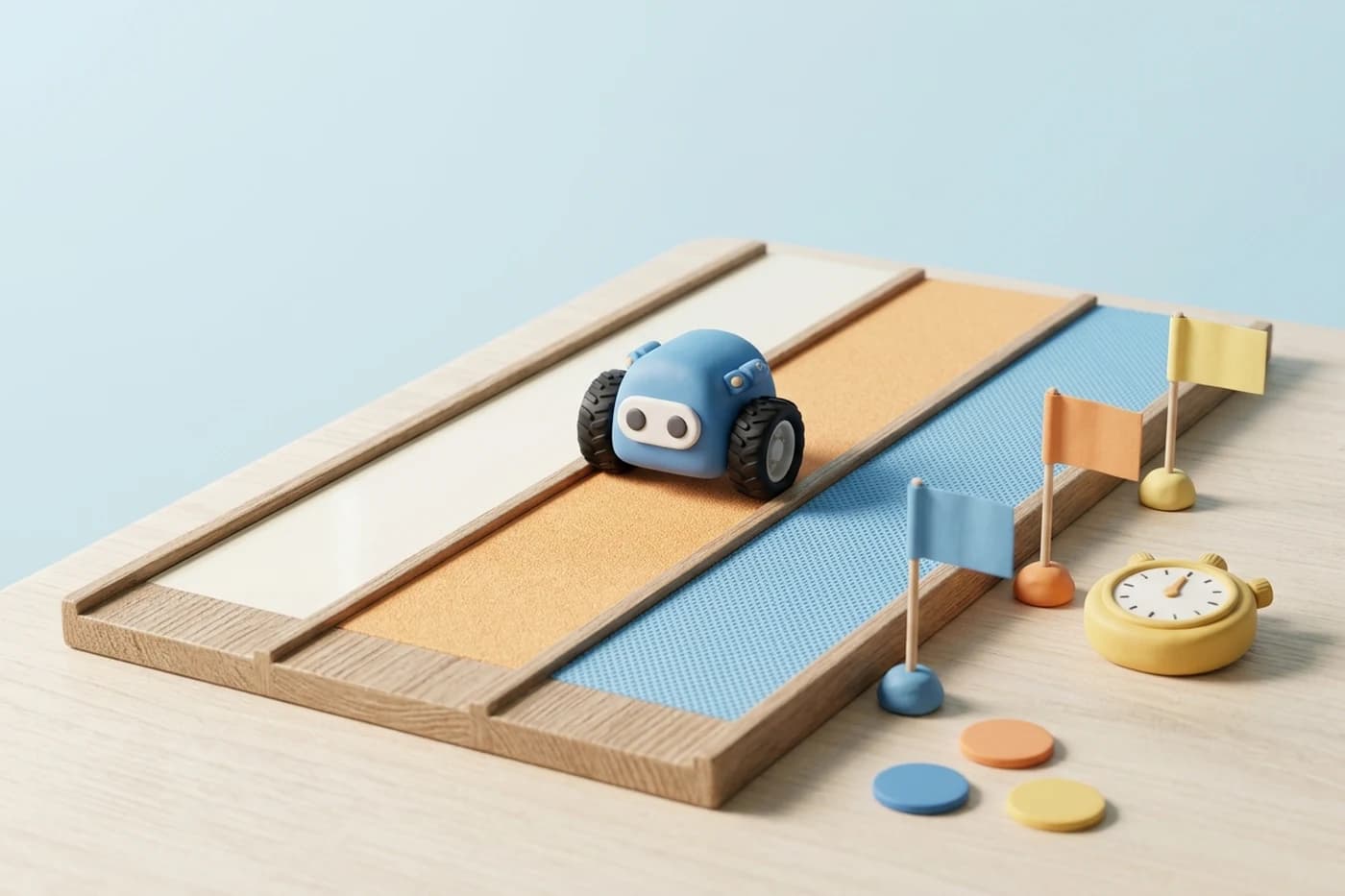
  2. A small robot at the start of a three-lane test track with flags and a stopwatch
    Session 02

    Mechanics: Motion, Speed, Acceleration and Forces

    Investigate motion and friction. Change a surface, repeat a fair test and compare what happens.
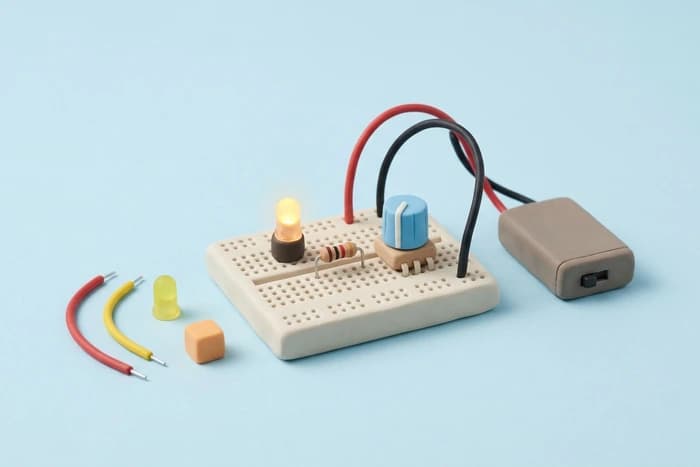
  3. A breadboard with a glowing LED, resistor and dial wired to a two-cell battery holder
    Session 03

    Electricity and Circuits

    Explore how a simple circuit works, using supervised low-voltage activities.
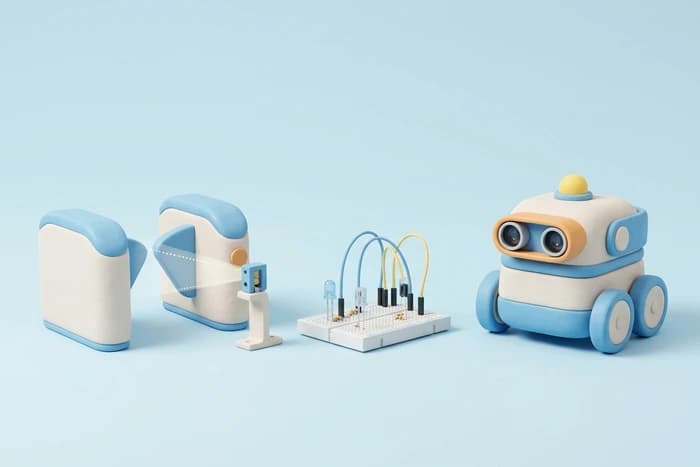
  4. A miniature sliding door, a remote control and a sensor module side by side
    Session 04

    Sensors and Diodes

    Connect familiar everyday systems to sensing and the role of a diode.
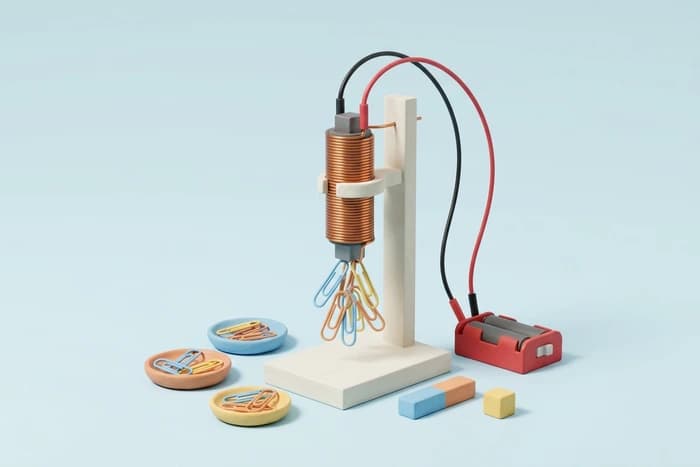
  5. A wire coil around an iron core lifting paperclips, wired to a battery holder
    Session 05

    Magnetism and Motors

    Investigate magnetism and how a motor turns electrical energy into movement.
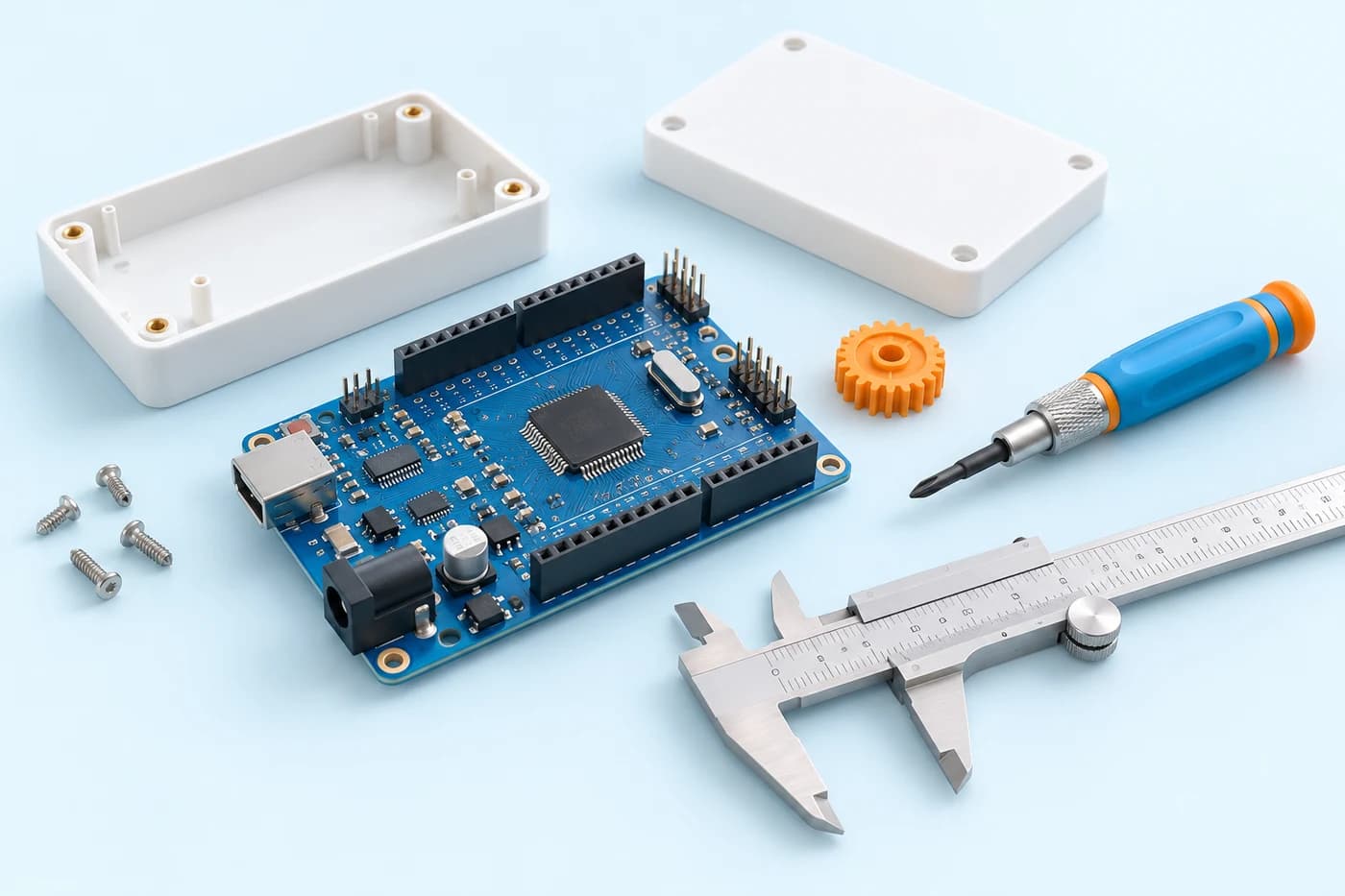
  6. A controller board, enclosure parts and tools on a workbench
    Session 06

    Programming I: Blocks and Differential Drive

    Explore introductory block programming and how two wheels can control a robot's direction.
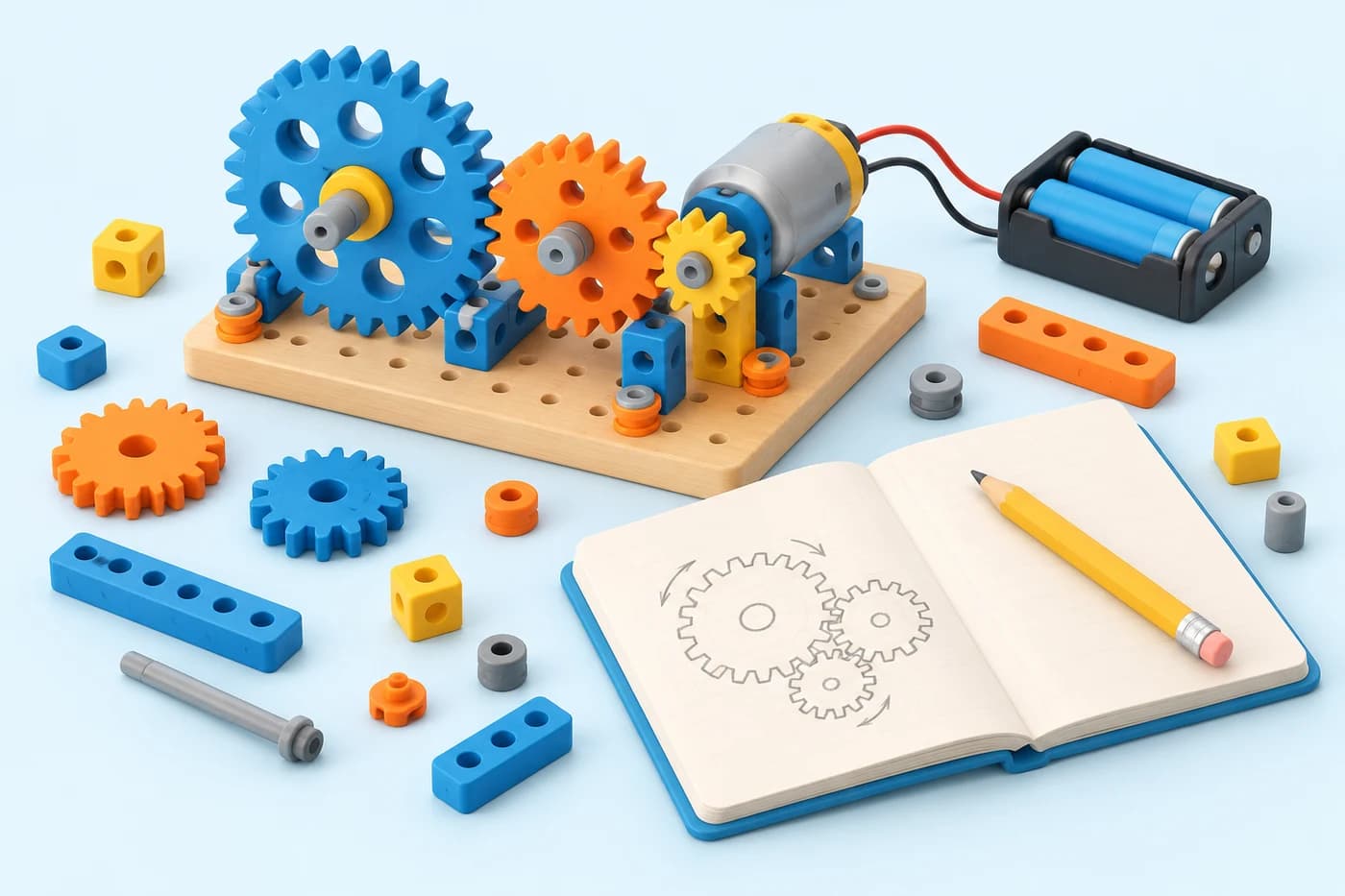
  7. Gears, a small motor and a notebook on a science table
    Session 07

    Torque and Actuators

    Investigate turning force and the mechanisms that create controlled movement.
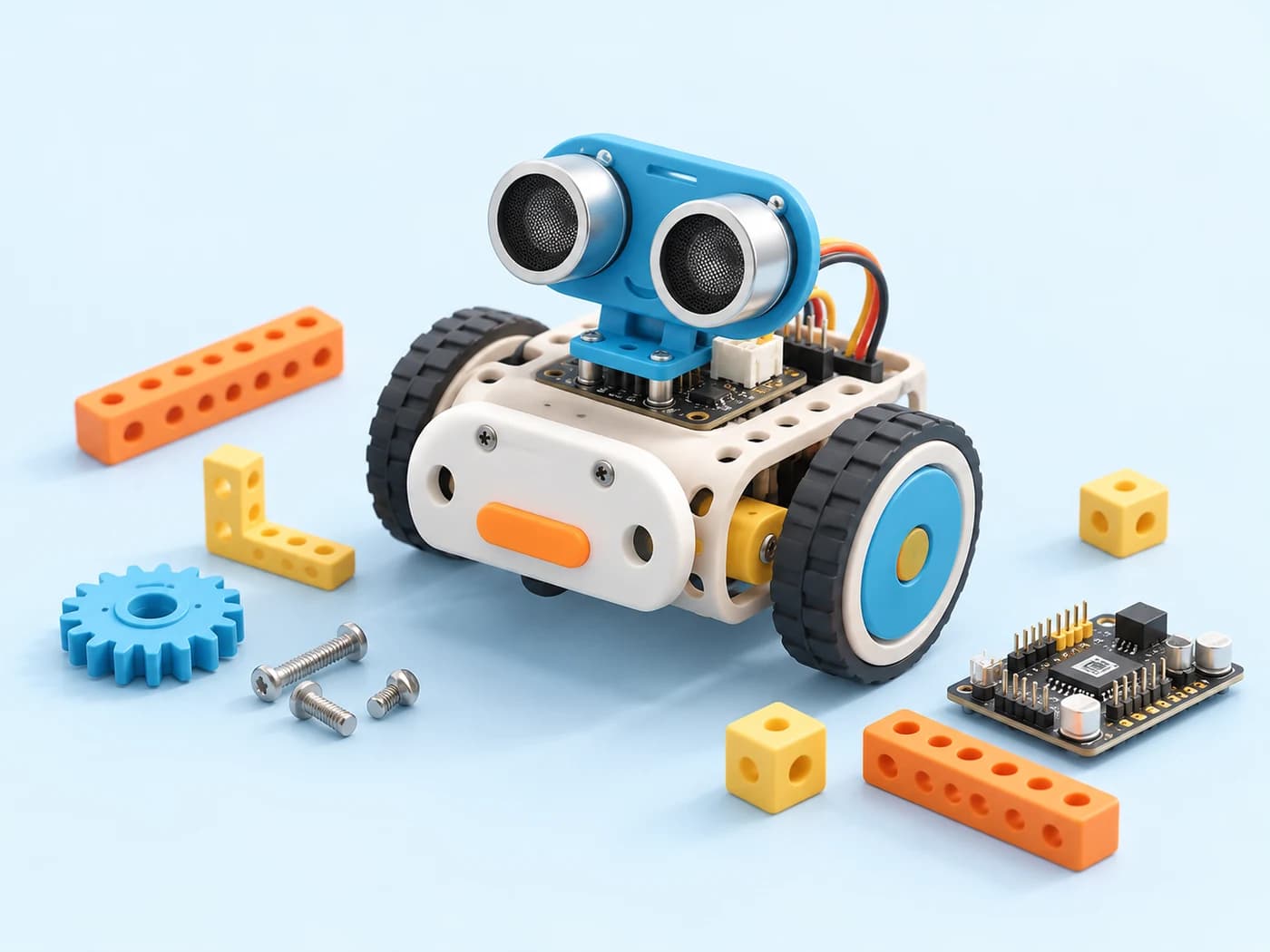
  8. A small two-wheeled robot with round ultrasonic eyes beside gears and a circuit board
    Session 08

    Acoustics and Distance Sensing

    Explore sound and distance measurement with a teacher-led ultrasonic demonstration.

  9. A small two-wheeled robot with round ultrasonic eyes beside gears and a circuit board
    Session 09

    Programming II: Closed-Loop Navigation

    Investigate how feedback from a sensor helps a robot adjust its own movement.

  10. Gears, a small motor and a notebook on a science table
    Session 10

    Materials and Mechanical Design

    Compare materials and shapes using a fair test and a record of your observations.

  11. Gears, a small motor and a notebook on a science table
    Session 11

    Robotic Arm and Manipulator

    Explore a gripper and investigate what helps it hold an object.
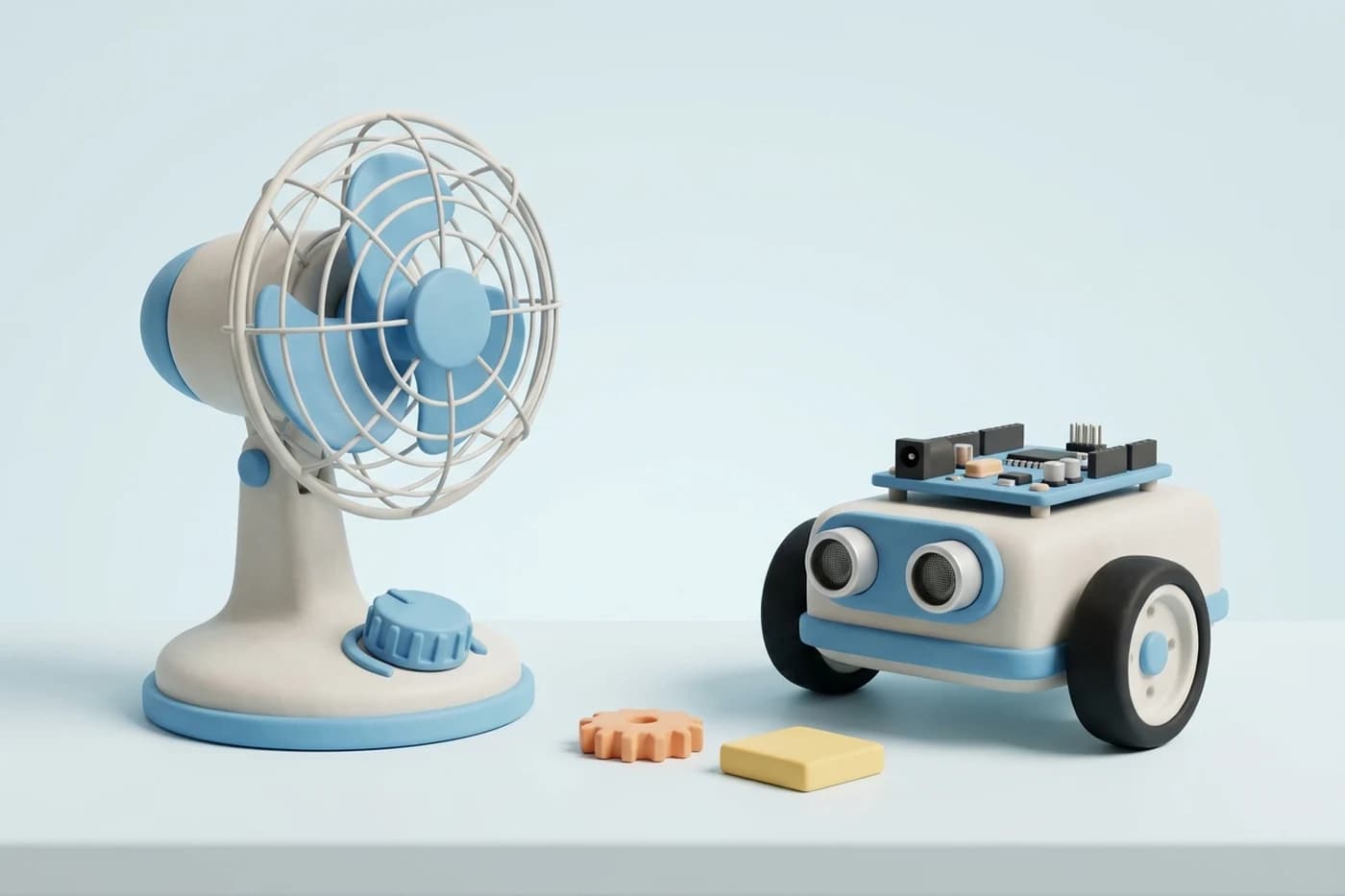
  12. A manual desk fan beside a finished sensing robot
    Session 12

    Capstone: Build, Demo and Improve

    Bring the ideas together: build the autonomous machine, test it, improve it and explain how it works.

Tuition

One fee, everything included

One simple fee per level, with everything a learner needs included.

Investment

₹7,200per level

Enroll now
  • Expert instructionGuided, hands-on teaching from the Botwing team.
  • Mechanical componentsAll the hands-on parts used to build each robot.
  • Circuitry materialsEverything needed to wire and test each circuit.

Free Tinkering Lab access

Every enrolled student gets free access to our Tinkering Lab in Jaipur, a safe, fully equipped space to practise, experiment, test new ideas and build side-projects outside regular class hours.

How a session runs

Test first, then explain

Every lesson follows the same 6 steps, so learners always know what comes next and why.

  1. 1

    Safety + Hook

    A quick safety check, then something surprising to see.

  2. 2

    Explore

    Look closely, predict what will happen and plan the test.

  3. 3

    Make / Test

    Build it, try it and measure three times.

  4. 4

    Explain

    Tell the story of what happened, using the data.

  5. 5

    Apply

    Use the idea on a new problem.

  6. 6

    Exit ticket

    Finish with one thing you learned.

Fair test

What do we change, what do we measure and what do we keep the same? Every test is tried at least three times.

Test first, explain after

Learners explain with evidence: “I claim ___ because the data shows ___.”

Everyday India

Ceiling fans, AC, metro doors, water tanks and cricket give each idea a familiar place to land.

Level 1 suits every age in classes 3–8
  • Classes 3–5

    Pictures, models and hands-on tests, with ideas explained without formulas.

  • Classes 6–8

    The same experiments with units, simple formulas and graphs.

Safety

Safety is rule number one

  • Low voltage only

    Level 1 student circuits stay at 3 V or below.

  • Risky tools stay out of student hands

    No mains electricity, soldering, hot glue or cutters in student activities.

  • A safety watcher in every group

    Each group has a safety watcher, and anyone can call STOP at any time.

  • Safety first, every session

    Every session opens with safety before the fun starts.

FAQ

Questions parents ask first

My child has never touched electronics. Where do they start?
Level 1, Bot Initiate. It is a foundation level for classes 3–8 and starts from the basics of how a robot works. No earlier robotics experience is needed.
What will my child actually do?
Hands-on work: wiring circuits, using real distance sensors, giving a robot instructions with block coding, and building a motorized gripper from scratch. Learners always test first and then explain what they found.
What does ₹7,200 per level include?
Expert instruction, the mechanical components and the circuitry materials used to build and test the robot in class.
What is the Tinkering Lab?
A physical, fully equipped space in Jaipur where every enrolled student can practise, experiment and build side-projects outside regular class hours. Access is free for enrolled students.
Do learners have to do all seven levels?
Each level is a step on the pathway, and the core sense-think-act ideas simply go deeper as learners progress. Message us and we will help you choose where your child should start.
How do you keep it safe?
Safety is rule number one. Level 1 student circuits stay at 3 V or below, with no mains power, soldering, hot glue or cutters. Each group has a safety watcher, and anyone can call STOP.
How do I apply for the course?
Click Enroll now to complete our Google application form. Submitting an application does not confirm a place or a start date.